

Bead Weaving 101: Let’s Get Started!
'So you want to try bead weaving? There’s plenty of ways to get started; enough so I’m not entirely sure that I can cover all of them. However! Shall do my best to help beginners get the information they need for a successful endeavor.
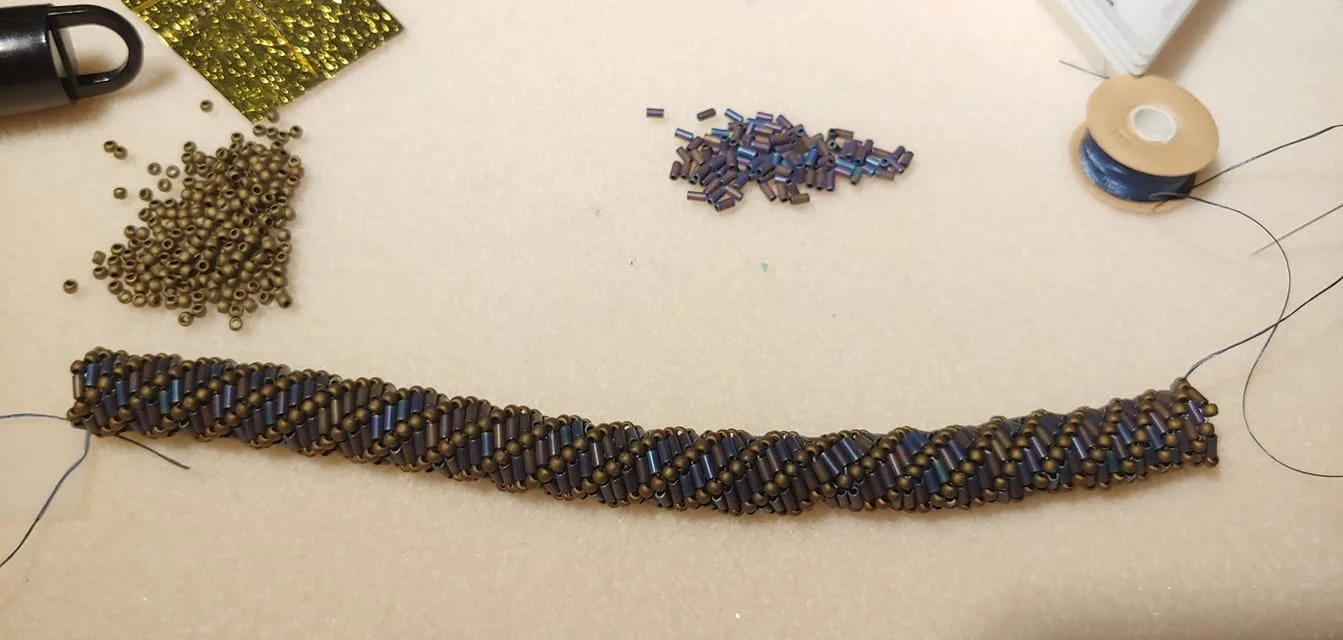
Russian Spiral Rope woven with size 11/0 Seed Beads and Size #1 Bugle Beads
Before you sit down and start weaving, first find a project! There are so many out there it’s tough to choose. Just remember you must learn to walk before you can run. There are thousands of beginner tutorials out there with really cute patterns to try. And remember— YouTube is your friend.
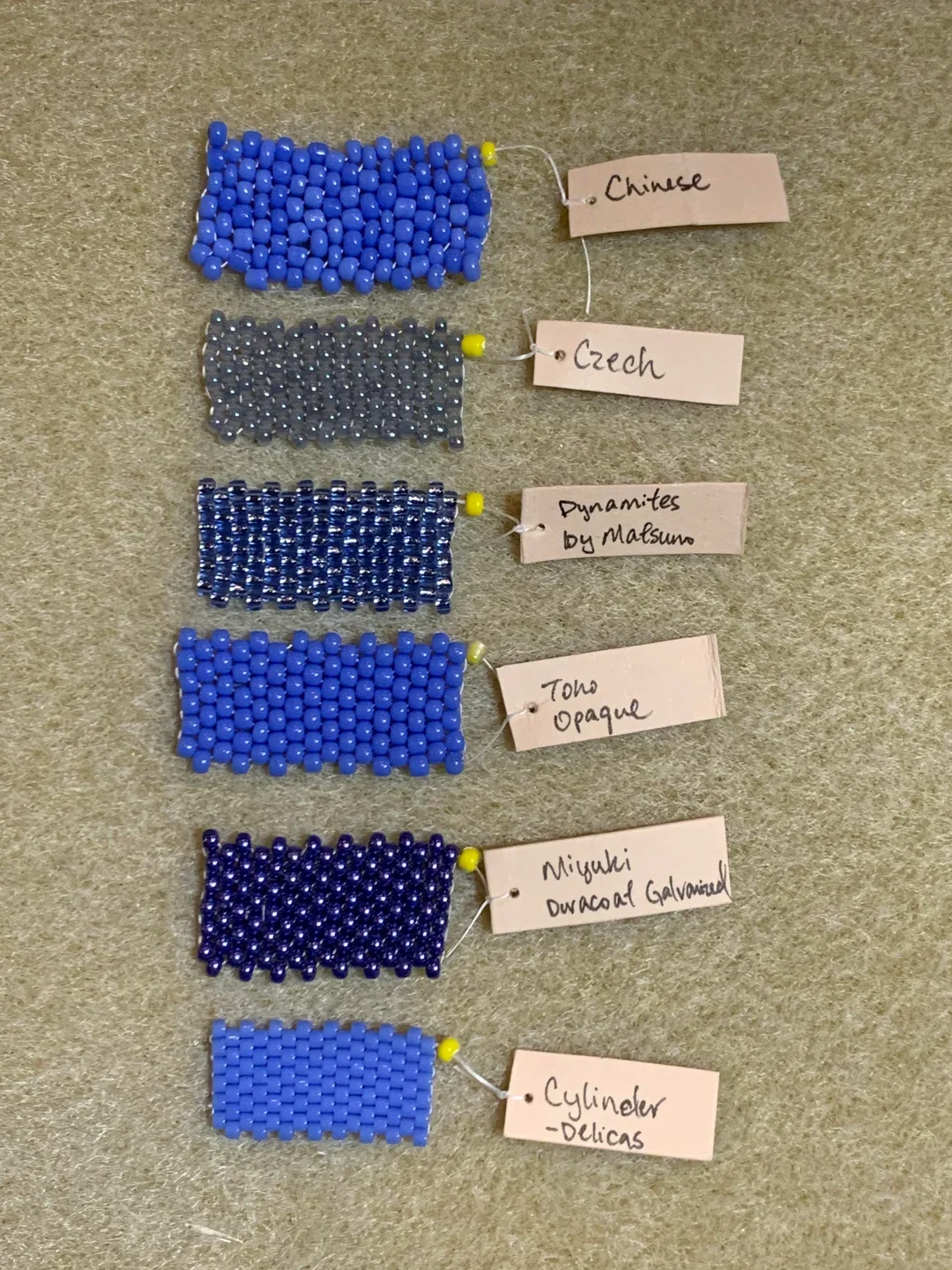
Sample found on a Reddit post from NaniNYQZ
Once you have a pattern, it’s time to pick your beads. Be sure to pay attention to what sort of beads the pattern calls for. Seed beads are a lot like women’s pants sizes, just because they’re labeled as the same size, does not mean they are the same size as a different brand!!
Everyone has their favorites as well. Most experienced beaders find which brand of bead they prefer and will gravitate toward that brand or type whenever they shop. Miyuki and Toho are the most common that are used and very reliable in size, but if you want to try something different, don’t let anyone stop you.
Thread types are another pitfall to watch out for. There are a surprising number of different threads out there and though I don’t believe any one is better than the other, I can say that your thread choice should depend on the pattern you’re doing. Let’s start by looking at the two common types of beading thread: Braided fishing filament and nylon.
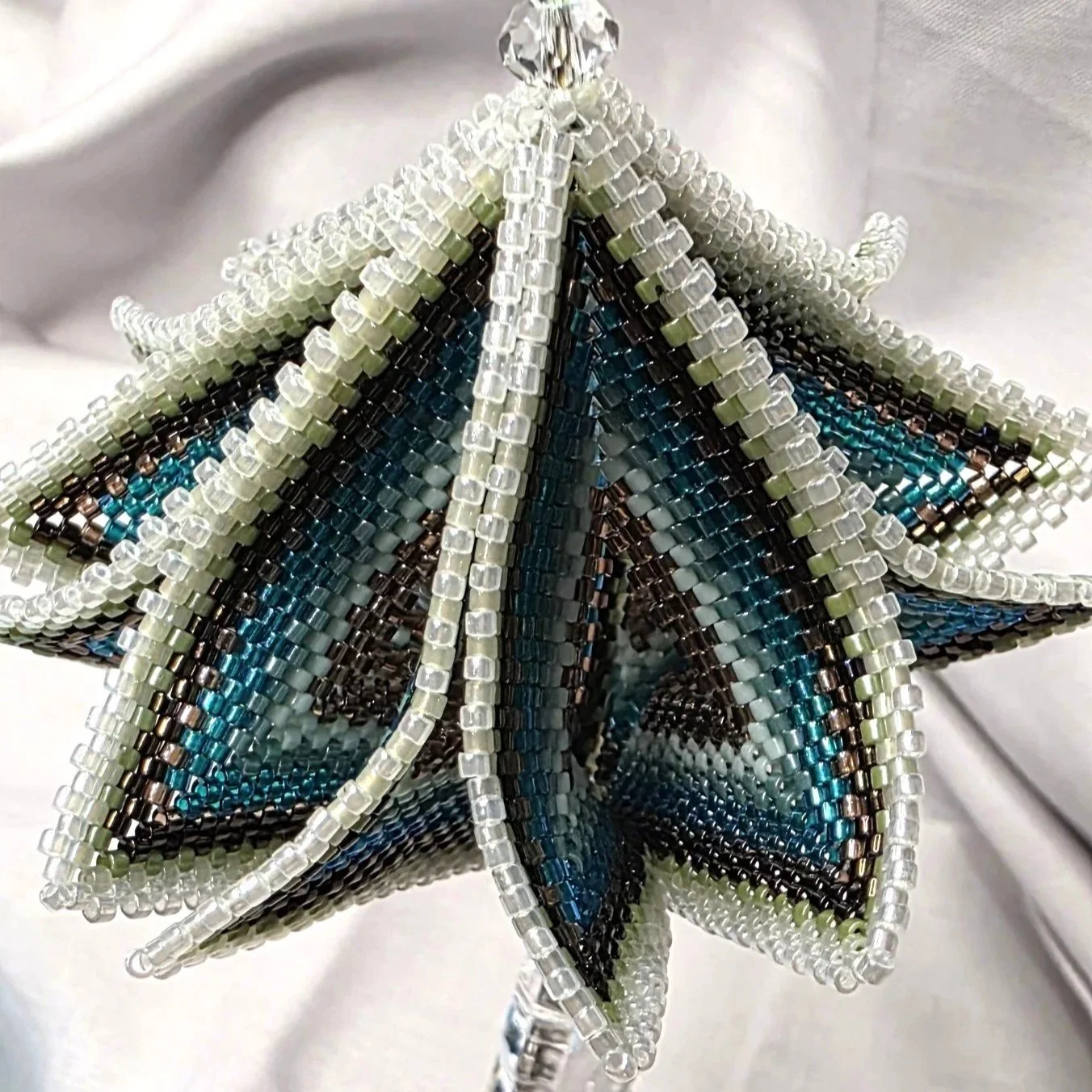
My Ornament from the December Color Palate Challenge
Which is used for what? It all comes down to flexibility. As you can guess, braided fishing filament like Fireline or S-Lon Fire is a lot stiffer than nylon and if you’re working on something that has structure, using a thread that doesn’t flex as much is important. You don’t need your dodecahedron flopping around all over the place like a limp balloon.
On the flip side though, if you’re working on something that should feel soft and supple, nylon thread is the best you can get. I think the most important example is fringe. Fringe earrings should have a cascade of beaded strands that move fluidly with the tilt of the head or the flick of the wrist. You will NOT get those results with braided fishing line. So when the time to choose comes, ask yourself; structure or smooth?
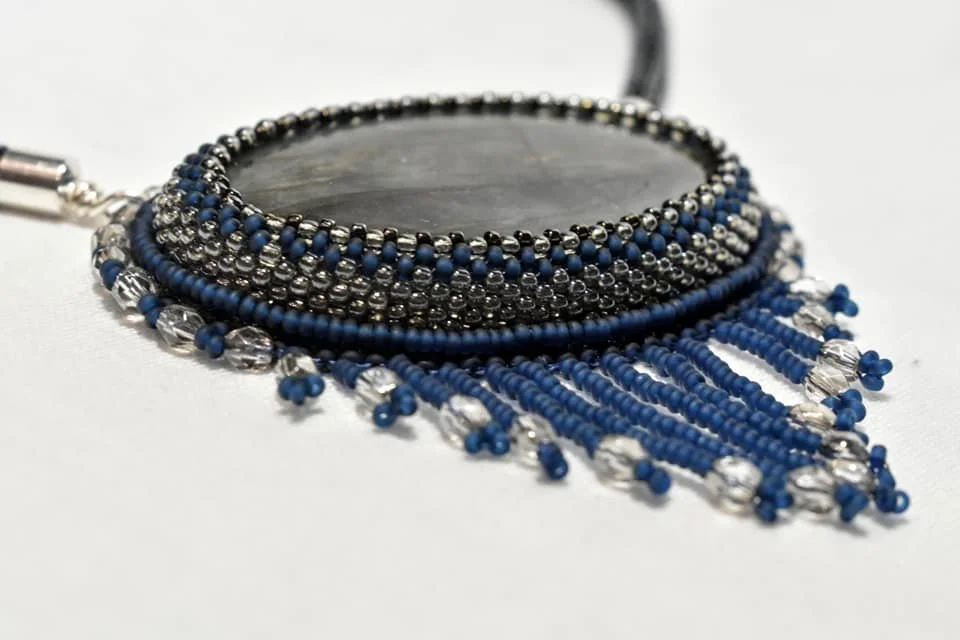
Fringed bead embroidery by Liz Turner
Lastly, let’s talk about beading needles.
Beading needles share the same style of size scale as beads! The lower the number the larger the needle. The numbers range from #10 to #15 with 10 being the largest and 15 being the smallest. As with threads and bead types, everyone has their favorite brand and it’s important to find what needles work for you!
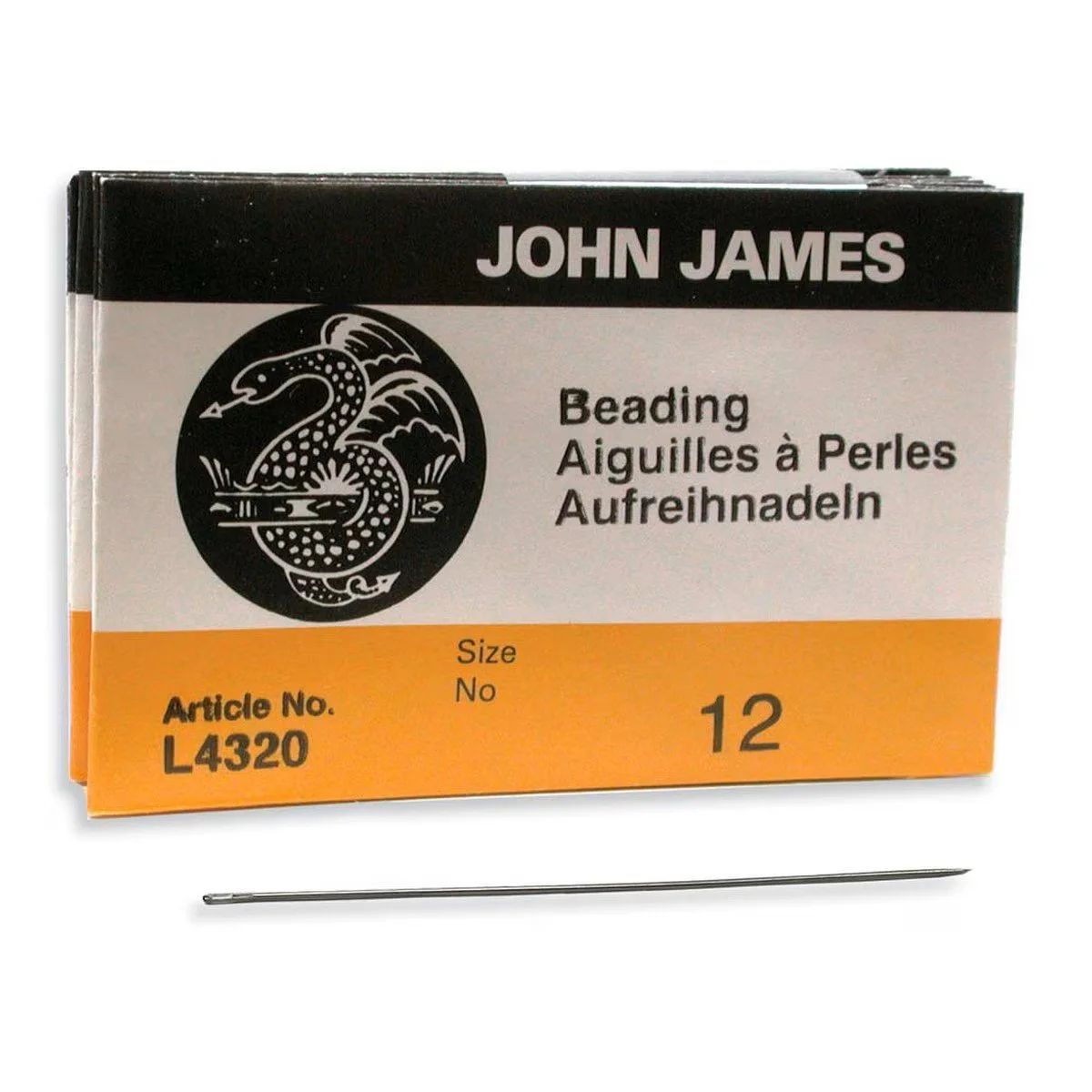
Size 12 needles from a popular needle brand for sale on our website!
Most patterns specify what size beading needle you will need. Most patterns will call for either size #10 or #12. It will depend on if the pattern calls for multiple passes through a bead or not. If a pattern does not specify what size needle you need, read the pattern and take note on whether or not it uses size 15/0 seed beads or has stitches that go through a bead more than two or three times.
Bear in mind, most of the time a size #12 needle is just fine! Also for those who struggle with the teeny tiny needle eyes, there are big eye needles. They don’t work for everything but they work for enough!
Happy Beading!